

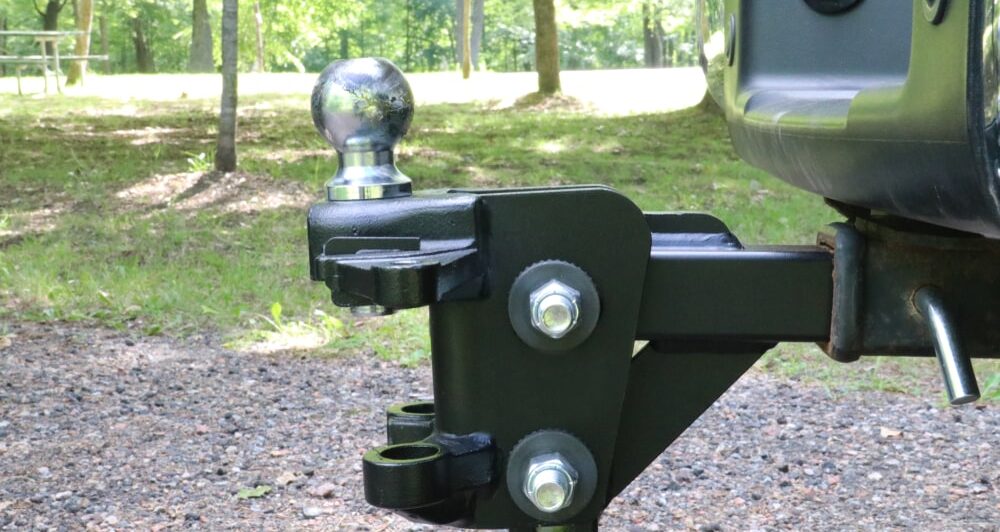
When you’re towing a trailer, camper, or boat, one thing matters more than almost anything else: balance. If your trailer isn’t sitting level or the rear of your vehicle is sagging, it can affect steering, braking, and overall control on the road.
That’s where a Weight Distribution Hitch comes in. It’s one of the most important towing accessories for improving stability and safety – but it also raises a common question:
Does a Weight Distribution Hitch increase my vehicle’s towing capacity?
The short answer is no.
A weight distribution hitch does not increase your vehicle’s maximum towing capacity. Instead, it helps you tow more safely and efficiently within your vehicle’s existing limits.
But let’s break down and show you exactly how it works and when you might need one.
What Is a Weight Distribution Hitch?
A Weight Distribution Hitch is an accessory for towing that helps evenly distribute the weight of your trailer across the vehicle and trailer axles for maximum towing function. Without one, the heavy tongue weight can push down on the rear of the vehicle, causing it to “squat” or “sag”.
When this happens:
- The front of the vehicle lifts slightly
- Steering and braking performance can decrease
- Headlights may point upward
- Trailer sway becomes more likely
A Weight Distribution Hitch uses spring bars and leverage to redistribute some of that weight:
- Forward to the front axle of the tow vehicle
- Rearward to the trailer axles
The result is a more level towing setup, better control, and a smoother ride.
The Why Behind It | Towing Capacity & Capabilities
As we covered, no, a Weight Distribution Hitch does not increase your vehicle’s towing capacity. Your towing capacity is determined by the vehicle manufacturer and depends on several factors, including:
- Vehicle frame strength
- Suspension design
- Engine power and drivetrain
- Brake capability
No hitch accessory can change these factory ratings. However, a Weight Distribution Hitch does help you safely tow up to your vehicle’s rated capacity by improving balance, stability, and control.
Think of it this way:
- Towing capacity = how much weight your vehicle is rated to pull
- Weight distribution = how safely and comfortably your vehicle can manage that weight
What a Weight Distribution Hitch Actually Does
While it doesn’t increase towing capacity, a Weight Distribution Hitch offers several important benefits.
Better Balance Between Trailer and Vehicle
When a trailer places too much tongue weight on the hitch, it can cause the trailer to dip downward toward the road. This creates a driving hazard and reduces stability. A Weight Distribution Hitch redistributes that weight so the load is shared more evenly between the trailer and tow vehicle.
Improved Steering and Braking
When the rear of the vehicle sags under load, less weight sits on the front axle, which is responsible for steering and much of the braking force. By restoring balance across all axles, a Weight Distribution Hitch helps maintain proper steering control and braking performance.
Reduced Trailer Sway
One of the biggest safety advantages of a Weight Distribution Hitch is improved stability.
When the load is properly balanced, the trailer is far less likely to sway from side to side, especially at highway speeds or in strong crosswinds. Many systems can also be paired with sway control for even more stability.
Less Wear and Tear on Your Vehicle
Uneven loads place unnecessary stress on your vehicle’s suspension, tires, and frame.
By distributing the load more evenly, a Weight Distribution Hitch helps protect your vehicle and reduce long-term wear on components.
Do You Need a Weight Distribution Hitch?
Not every towing setup requires one, but many heavier towing scenarios benefit greatly from it.
Traditionally, you may need a Weight Distribution Hitch when:
- Your trailer weighs more than 4,000–5,000 lbs
- The trailer’s weight exceeds about half the vehicle’s weight
- The rear of your vehicle visibly sags when towing
- You experience trailer sway
- Your vehicle manufacturer recommends one in the owner’s manual
Even smaller vehicles towing lighter loads may benefit from a Weight Distribution Hitch if balance and stability are issues.
Signs That You Need a Weight Distribution Hitch ASAP
Here are some easy signs that indicate your current towing setup could benefit from a Weight Distribution Hitch:
- Your vehicle squats noticeably when the trailer is connected
- Your headlights point upward when towing
- Steering feels lighter than normal
- Braking distance increases
- You experience trailer sway at highway speeds
If any of these happen, a Weight Distribution Hitch could significantly improve your towing safety.
Decision Checklist | Do You Need One for Your Trailer?
Travel Trailer or Camper
A Weight Distribution Hitch is commonly recommended if:
- Trailer weight exceeds 4,000–5,000 lbs
- You’re towing long distances
- Your vehicle is an SUV or a half-ton truck
Many travel trailer manufacturers recommend them for improved stability.
Understanding Your Vehicles Towing Weight Terms
When towing, it helps to understand a few important weight ratings:
- GVWR (Gross Vehicle Weight Rating)
The maximum weight your vehicle can haul safely, including passengers, cargo, and fuel. - GCWR (Gross Combined Weight Rating)
The maximum weight of your vehicle and your trailer combined together.
These ratings should never be exceeded, even when using a Weight Distribution Hitch to ensure vehicle, cargo and passenger safety. .
Can a Weight Distribution Hitch Reduce Tow Ball Weight?
A Weight Distribution Hitch does not eliminate tongue weight, but it does redistribute it across the towing system. By transferring some of the weight forward to the front axle and rearward to the trailer axles, it reduces stress on the hitch connection and helps maintain balance. This improves stability while keeping the trailer level.
Still Not Sure if You Need a Weight Distribution Hitch?
Every towing setup is different. Trailer weight, vehicle type, and cargo distribution all play a role in determining whether a Weight Distribution Hitch is necessary. If you’re unsure, the best option is to speak with towing specialists who can evaluate your setup.
At Calgary Hitch Shop, we help drivers choose the right hitch systems, weight distribution setups, and towing accessories for their vehicles.
Stop by one of our Calgary locations or contact our team today and we’ll help you choose a towing setup that’s safe, stable, and ready for your next road trip!
