

Heading south toward warmer climates or navigating icy highway corridors with a dinghy vehicle requires extra preparation as temperatures drop. Towing four wheels down behind a motorhome offers unbeatable travel convenience,but cold asphalt, blowing slush, and sudden mountain squalls leave little room for equipment error.
Following a dependable flat towing checklist ensures your toad tracks smoothly, stops reliably, and stays protected across challenging winter routes.
Necessary Equipment and Winter Road Readiness
Freezing conditions test every mechanical link between your coach and towed car. Cold temperatures stiffen wiring harnesses, pack gritty salt spray into moving joints, and reduce overall tire traction.
Before pulling out of the driveway, work through these fundamental preparation steps:
- Verify towing capacities and drop alignment: Confirm that your motorhome hitch rating comfortably exceeds the curb weight of your vehicle, and use a drop receiver to keep your tow bar perfectly level within three inches.
- Inspect the auxiliary braking system: Cold temperatures sap car batteries quickly; make sure your supplemental proportional braking unit engages smoothly and that a dedicated charge line keeps the dinghy battery topped up.
- Winterize electrical cables and safety chains: Coat electrical pins with dielectric grease to block corrosive road brine, and cross your heavy-duty safety cables beneath the coupler to cradle the assembly if an unlatch occurs.
- Equip proper rubber on all axles: Both your motorhome and your towed car need winter-rated or heavy all-weather tires with sufficient tread depth, as cold highway slush can cause low-tread dinghy tires to hydroplane or fish-tail.
- Install protective rock guards: Deflectors or full-width rubber tow guards mounted across the coach bumper prevent flying gravel and frozen chunks of ice from cracking the windshield or radiator of your car.
Why Blue Ox Sets the Standard for Safe Dinghy Towing
When navigating demanding winter highways, your connection hardware must handle intense vibrations and rapid temperature swings. Blue Ox remains the undisputed industry benchmark for flat towing systems, engineered to endure the harshest seasonal demands.
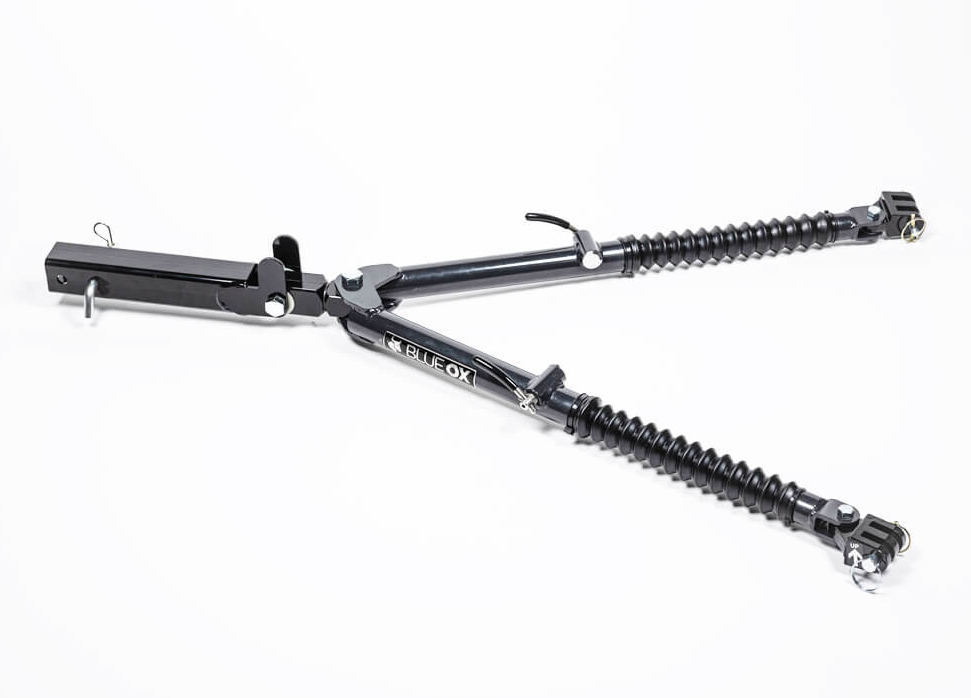
Their premium tow bars, such as the Avail and Ascent, feature non-binding latches that release effortlessly even when parked on uneven, snow-packed pullouts. Sealed rubber boots enclose the telescoping steel arms, keeping out road grime,melting ice, and abrasive road sand that cause inferior bars to seize up. Paired with custom baseplates that bolt directly into your towed vehicle’s structural subframe, Blue Ox hardware provides rock-solid tracking through high-wind prairie stretches and winding mountain passes alike.
Smart Driving Habits for Icy Highways
Even the highest-grade mechanical setup requires adjustments behind the wheel once the snow starts falling.
Always disengage your motorhome’s cruise control on slick or wet roads to maintain direct throttle feel, and turn down your auxiliary engine compression brake if rear drive wheels lose grip on black ice. Increase your following distance to at least triple your standard summer gap, allowing the proportional braking system to bring both vehicles to a controlled,straight-line stop without pushing the motorhome.
Prepare Your Setup at Calgary Hitch Shop
Don’t let freezing weather compromise your travel plans or equipment safety. Visit Calgary Hitch Shop or contact us to explore our complete lineup of Blue Ox tow bars, custom-fit baseplates, and advanced auxiliary braking units. Our certified technicians can evaluate your motorhome and dinghy combination, install every component to exact factory specifications, and get your rig road-ready for a seamless snow season.
