

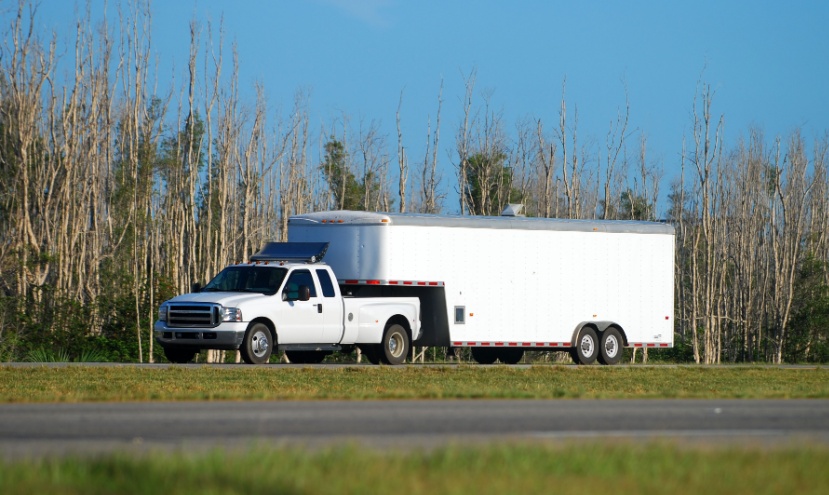
When you want to pull a fifth wheel trailer but all you have is a gooseneck hitch, it is possible with the right conditions and equipment. Towing a fifth wheel using a gooseneck trailer hitch requires an adapter and ensuring the towing vehicle has adequate weight-load capacity. This setup is not meant as a permanent solution since fifth-wheel hitches offer more stability for large RVs.
Due to design disparities, directly towing a fifth wheel trailer with a gooseneck hitch poses compatibility challenges. When circumstances necessitate the use of a gooseneck hitch for towing a fifth wheel, and your truck is already equipped with a gooseneck ball and can handle the trailer’s weight, with the correct adapter, you can make it work.
Differences Between Gooseneck and Fifth-Wheel Hitches
Gooseneck hitches connect to a ball mounted in the truck bed and are suited for various trailers, such as flatbeds and livestock trailers. Fifth wheel hitches, resembling semi-truck hitches, use vice-like jaws to secure the trailer’s kingpin, offering a smoother and more stable towing experience.
Warranty Considerations
Before proceeding, check if an adapter affects your truck or trailer’s warranty. Some manufacturers might void the
warranty if damage occurs from towing with improper equipment.
Adapter Options for Towing a Fifth Wheel
Adapters range from those replacing the kingpin to plates that fit over the gooseneck ball, allowing for kingpin connection. Each option bridges the gap between gooseneck and fifth-wheel towing requirements without necessitating kingpin modifications.
Replace the Trailer Pin Box Adapter
This adapter directly replaces your trailer’s pin box, creating a secure and permanent connection without stressing the trailer frame or hitch. It also keeps your truck bed free for other uses. Note that it’s designed for specific pin boxes, so check your trailer for compatibility.
Adapter That Uses the Ball Hole of the Gooseneck Hitch
This adapter is ideal for those who frequently switch between trailer types. It fits into the gooseneck hitch’s ball hole without needing trailer modification. It offers flexibility and easy removal for cargo hauling. Compatibility with specific pin boxes is required.
Attach a Gooseneck Ball to the Truck Bed Adapter
This lightweight option reduces stress on the trailer’s frame thanks to its higher attachment point, which is attached to the underbed gooseneck ball. It’s one of the simplest ways to convert a gooseneck hitch to accommodate a fifth-wheel trailer.
King Plate Attachment Adapter
This adapter is useful for temporary conversions but may add stress to the trailer frame and hitch. It is designed to be mounted around the kingpin without removing the pin box. It’s not suitable for all trailers, and some manufacturers limit the pin box length that can be used with these adapters.
Hooking Up a Fifth Wheel with an Adapter
The process mirrors that of attaching a gooseneck trailer, from securing the trailer’s legs to attaching safety chains and ensuring all lights are operational. A crucial step is ensuring the trailer is level with sufficient clearance from the truck’s bed rails.
Connecting a Fifth Wheel with an Adapter: A Step-by-Step Guide
Hooking up a fifth wheel after fitting an adapter is similar to attaching a gooseneck trailer. Here’s how to proceed once your adapter is ready:
Stabilize with Legs: Ensure the fifth wheel’s support legs are down and locked in place. These are crucial for keeping the trailer stable when it’s not attached to the tow vehicle. Typically, these legs are equipped with electric hydraulic lifts that allow you to adjust the trailer’s height easily.
Lower the Tailgate: It’s a common oversight, but remember to lower your truck’s tailgate before backing up to the trailer. This prevents damage to the tailgate from the trailer’s coupler or kingpin.
Align the Truck and Trailer: With someone guiding you, back the truck in a straight line towards the trailer’s kingpin. This requires precision to ensure a smooth hookup.
Engage the Coupler: Use the hydraulic legs to lower the trailer onto your truck’s gooseneck ball. This step requires patience and care. Once the coupler is in place, make sure it’s tightly secured.
Secure Safety Measures: Attach all necessary safety chains and cables to the truck. These are essential for a safe towing experience.
Connect Electricals: Plug in the 7-pin connector to link the trailer’s electrical system with the truck’s. This step ensures that all your trailer’s lights are functioning correctly.
Raise the Legs: Before setting off, secure the trailer’s legs to their travelling height. This prevents any potential dragging while you’re on the move.
Conduct a Safety Check: Finally, perform a thorough safety inspection. Have someone assist by checking the brake lights, turn signals, and tail lights from the driver’s seat of the truck. Additionally, verify there’s sufficient clearance between the trailer’s kingpin and the truck’s bed rails, aiming for at least six inches of space to ensure the trailer remains level during transit.
Expectations When Towing with a Gooseneck Hitch
Using a gooseneck hitch for a fifth wheel trailer may lead to a noisier and less smooth towing experience, particularly around curves, due to the less stable connection compared to a standard fifth-wheel hitch. Drivers should exercise caution and adjust driving practices accordingly.
Get the Right Hitch at The Calgary Hitch Shop
Ideally, using a fifth wheel hitch is your best option when pulling a fifth wheel trailer. Sometimes we can’t avoid using a gooseneck hitch for applications it may not have been designed for, but it still works well for the job. At The Calgary Hitch Shop, we’re the leader for gooseneck hitches in Calgary, and we can help you find exactly what you need, or we can custom fabricate a hitch for all your towing needs.
